


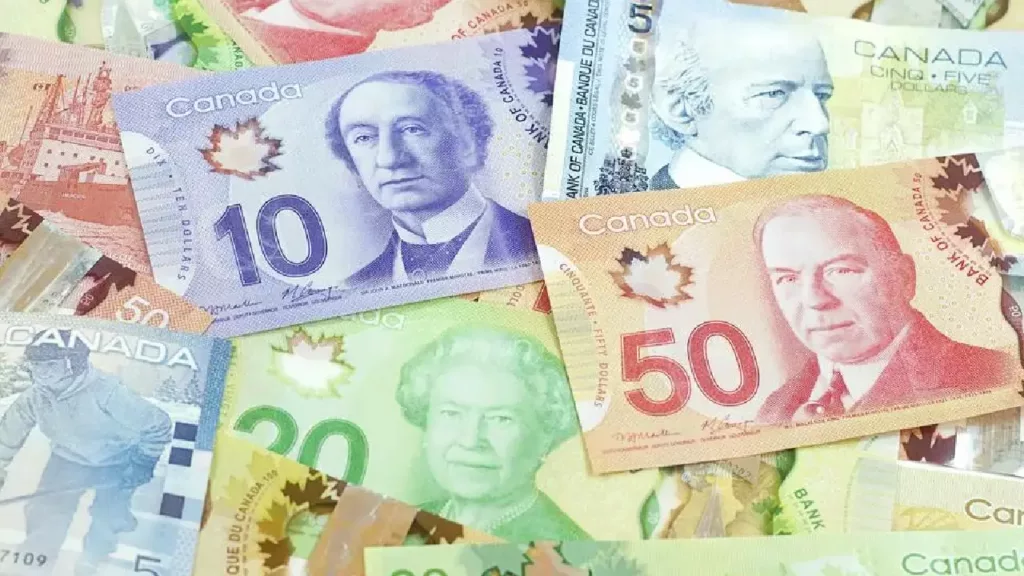
The Canadian Dollar (CAD), often nicknamed the “Loonie” in reference to the common loon engraved on the one-dollar coin, is the official currency of Canada. Its history and strength in the international market are closely linked to the country’s economic evolution, particularly its wealth in natural resources.
History of the Canadian Dollar
Before the introduction of the dollar, the Canadian colonies used various currencies, including the British Pound Sterling and French currencies (livre, sol, denier). The current monetary system began to take shape with the Currency Act of 1858, which introduced the dollar as the unit of account, initially pegging its value to the US dollar.
Canada has experienced several exchange rate regimes:
- Gold Standard (until 1931): The dollar was convertible into gold at a fixed rate.
- Fixed Exchange Rate (at various times, notably during the World Wars): The dollar was pegged to a specific value, often relative to the US dollar.
- Floating Exchange Rate (introduced sustainably in 1950, then re-established in 1970): The CAD’s value is determined by market forces, supply and demand, which is the case today.
Key Fluctuations Against Major Currencies
The CAD is considered a “commodity currency” due to the Canadian economy’s heavy reliance on natural resource exports, especially oil.
US Dollar (USD)
The CAD/USD relationship is the most critical. Fluctuations are often inversely correlated with oil prices: when the price of crude oil rises, the CAD tends to appreciate against the USD, and vice versa. Monetary policies of the Bank of Canada (BoC) and the US Federal Reserve (Fed), as well as interest rate differentials, also play a major role.
Euro (EUR), Pound Sterling (GBP), and Yen (JPY)
Against the Euro, the Pound Sterling, and the Japanese Yen, the CAD also reacts to movements in commodity markets, as well as to differences in economic growth, inflation, and the decisions of the respective central banks. For example, strong growth in Canada and a hike in interest rates can make the CAD more attractive.
Chinese Yuan (CNY)
Given that China is a major player in commodity demand, the CAD is sensitive to economic data and the health of the Chinese market. Increased demand for resources from China can support the value of the CAD relative to the Yuan.
CFA Franc (XOF/XAF)
The fluctuation of the CAD against the CFA Franc (used in several West and Central African countries) is primarily determined by the CFA’s parity with the Euro (as the CFA is pegged to the EUR), and secondarily by the CAD’s movements against the Euro. When the CAD appreciates against the EUR, it also appreciates against the CFA.
The CAD’s Strength in the International Market
The Canadian dollar is considered one of the top ten most traded currencies globally. Its strength stems from several factors:
- Natural Resources: Canada is a major exporter of energy, metals, and agricultural products. The state of global commodity markets is a key indicator of the CAD’s health.
- Political and Economic Stability: Canada is known for its political stability, robust banking system, and generally prudent fiscal management, making it a relatively safe investment destination.
- Reserve Status: Although minor, the CAD is included in a small portion of global foreign exchange reserves, reflecting the confidence of international financial institutions.
For the Canadian diaspora looking to support loved ones, Transfergratis offers a money transfer platform that facilitates the quick and secure sending of funds from Canada to many countries in Africa, ensuring competitive exchange rates for the Canadian dollar.
Try Transfergratis today and optimize your international financial flows! The Transfergratis platform is a free, fast, and secure money transfer service from Canada to Africa. Download the app on the Play Store or the App Store.