


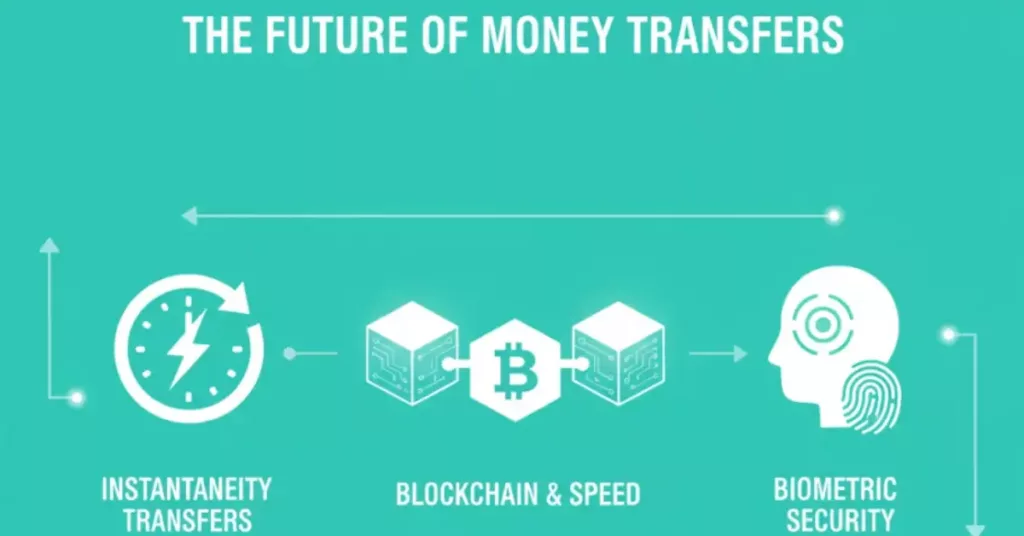
The evolution of money transfers has been significant, yet the future promises even more profound changes. Imagine sending funds instantly, with ultra-high security, and without complicated intermediaries. This is the paradigm shift we are moving towards.
1. Instantaneity: The End of Waiting Periods
Currently, waiting hours, or even days, for a bank transfer to arrive is commonplace. However, in the future, this waiting period will become obsolete.
- The Concept: Instantaneity ensures that funds are available to the recipient within mere seconds, 24 hours a day, 7 days a week.
- Significance:
- Urgency: Eliminates stress during critical times when funds are needed immediately.
- Efficiency: Companies can pay suppliers faster; salaries can be disbursed in real-time.
- Innovation: This speed facilitates the emergence of new financial services.
- Realization: Many countries are already developing national instant payment systems (such as the SEPA Instant Credit Transfer in Europe). The next stage is achieving universal, cross-border instantaneity.
2. The Blockchain: Revolutionizing the Banking System
The blockchain, the technology underpinning cryptocurrencies like Bitcoin, is far more than just digital currency. It is a powerful technology capable of transforming money transfers.
- Mechanism: The blockchain is a shared, digital ledger. Each transaction is recorded in “blocks” which are cryptographically linked and secured by complex computations.
- Decentralization: No single bank or authority controls the system. The network manages transactions autonomously.
- Transparency: All transactions are visible to participants (though identities remain anonymous or pseudonymous).
- Security: Once a transaction is recorded, it cannot be altered. Tampering or hacking is extremely difficult.
- Impact on Transfers:
- Reduced Costs: Fewer intermediaries equate to lower transaction fees.
- Speed: Transactions can be validated in minutes, circumventing bank operating hours.
- Accessibility: Even individuals without traditional bank accounts can send and receive money via digital wallets.
- Case Studies: Certain corporations are already utilizing blockchain for cross-border payments, confirming its viability as a future solution.
3. Biometric Security: Protecting Your Assets
With faster transfers and reliance on new technologies, security becomes paramount. Biometrics offers a highly promising solution.
- The Concept: Biometrics uses unique physical characteristics to verify identity.
- Fingerprints: Already standard on smartphones.
- Facial Recognition: Used for device unlocking or payment authorization.
- Iris Scan: Extremely precise, offering maximum security.
- Voice Analysis: Used to confirm identity through vocal patterns.
- Advantages:
- Enhanced Security: It is far more challenging to steal a fingerprint or facial structure than to guess a password.
- Simplicity: Eliminates the need to remember numerous passwords or codes. A simple gesture or glance suffices.
- Anti-Fraud: Biometric authentication significantly complicates identity theft and fraud.
- Application to Transfers: Imagine validating a large money transfer using only your fingerprint or a facial scan. This method is not only rapid but also profoundly secure.
Conclusion
The future of fund transfers is compelling. Instantaneity will ensure money is available when needed, blockchain will introduce greater transparency and lower costs, and biometric security will guarantee that only you can access your funds. These innovations will not only simplify our lives but also work towards making financial services fairer and accessible to everyone, globally.
Try Transfergratis today and optimize your international financial flows! The Transfergratis platform is a free, fast, and secure money transfer service from Canada to Africa. Download the app on the Play Store or the App Store.