


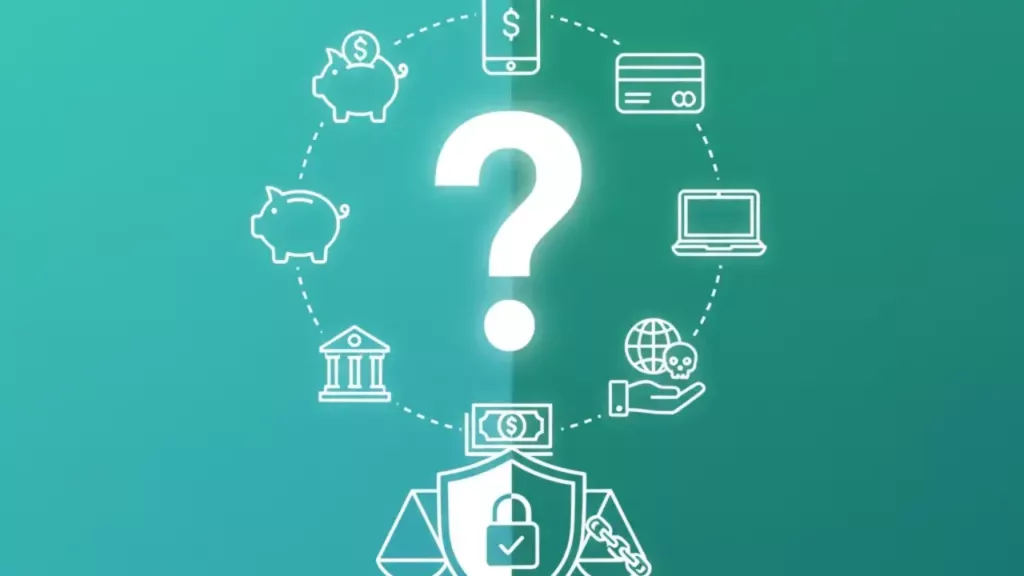
When sending money, especially remotely, security is our first concern. We want to be certain our money arrives safely, without getting lost and, above all, without falling into the wrong hands. However, with all the options available today—banks, online services, mobile apps—it’s easy to feel overwhelmed.
In reality, the safest option isn’t necessarily the oldest (like a traditional bank). It’s more about the service that offers the most guarantees and transparency. Let’s look at the essential criteria for making a secure choice.
1. The golden rule: Check who is behind the service
First, security begins with trust. Before using any service, you absolutely must check if it is regulated.
For example, in Canada, a service must be registered with financial institutions ( FINTRAC ). In Europe, it must be authorized by the banking authorities of its country ( AMF for France).
In other words, a reliable money transfer service must be as serious as a bank, even if it is 100% online.
Furthermore, these regulatory bodies require companies to adhere to very strict rules against fraud and money laundering. Therefore, if the operator does not clearly display its licenses or authorizations, steer clear.
2- The digital shield: Encryption and data
Then, when you make an online transfer, your information travels. That’s why protecting this data is vital.
The transfer service must use encryption.
In practical terms, encryption is a bit like putting your money in a digital safe locked with a very complex code. Only you and the recipient can “read” the information.
Also, check that they require two-factor authentication. This is often a code sent to your phone in addition to your password, making it virtually impossible for fraudsters to access your account.
Thus, a secure service does not just transfer money, it also protects your identity and banking details.
3- The importance of monitoring and transparency
A secure service is one that doesn’t leave you in the dark after you click “Submit.” Transparency is a sign of reliability. The service provider should give you a tracking (or reference) number for your transaction.
Furthermore, this number allows you to track your money in real time. If a problem arises, you can prove that the transfer has been made and is in transit.
Finally, good customer service is the last line of defense. If you have a question or doubt about a transaction, you should be able to quickly reach someone to help you.
4- Beware of risky methods
In conclusion, there are methods best avoided if you don’t know the recipient perfectly. Avoid sending money in cash or via untraceable methods, especially for large transactions.
Similarly, never give your login details to a third party, even if they claim to be from the money transfer service. Ultimately, the safest way to send money is with a service that combines robust regulation, cutting-edge technology (encryption), and complete transparency regarding the status of your transaction.
Essayez TransferGratis dès aujourd’hui et optimisez vos flux financiers internationaux ! La plateforme Transfergratis est un service de transfert d’argent gratuit, rapide et sécurisé du Canada vers l’Afrique. Téléchargez l’application sur le Play Store ou l’App Store.